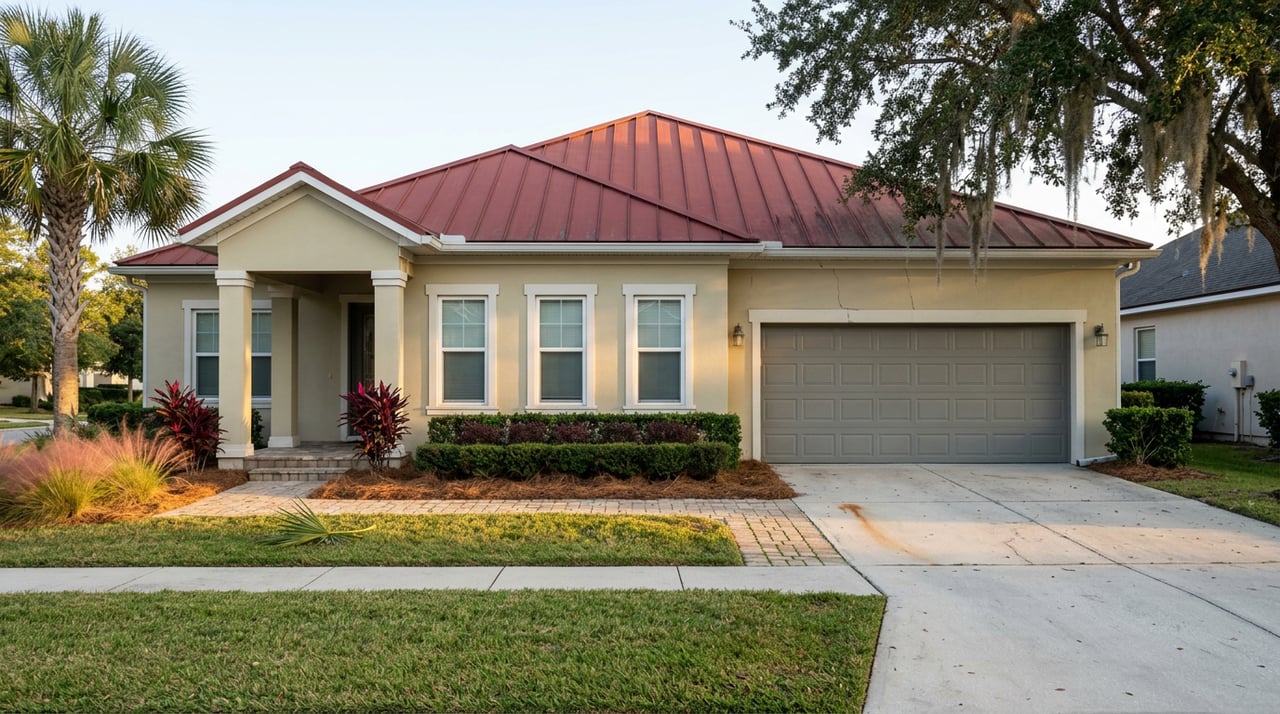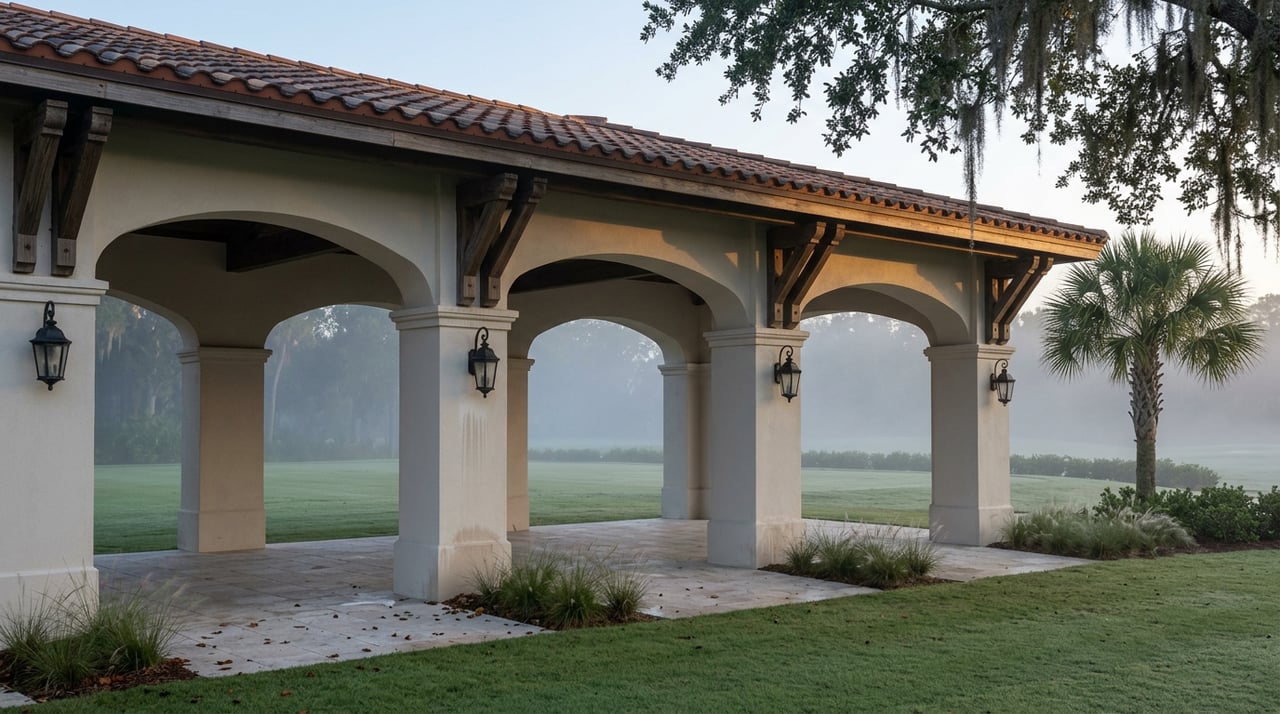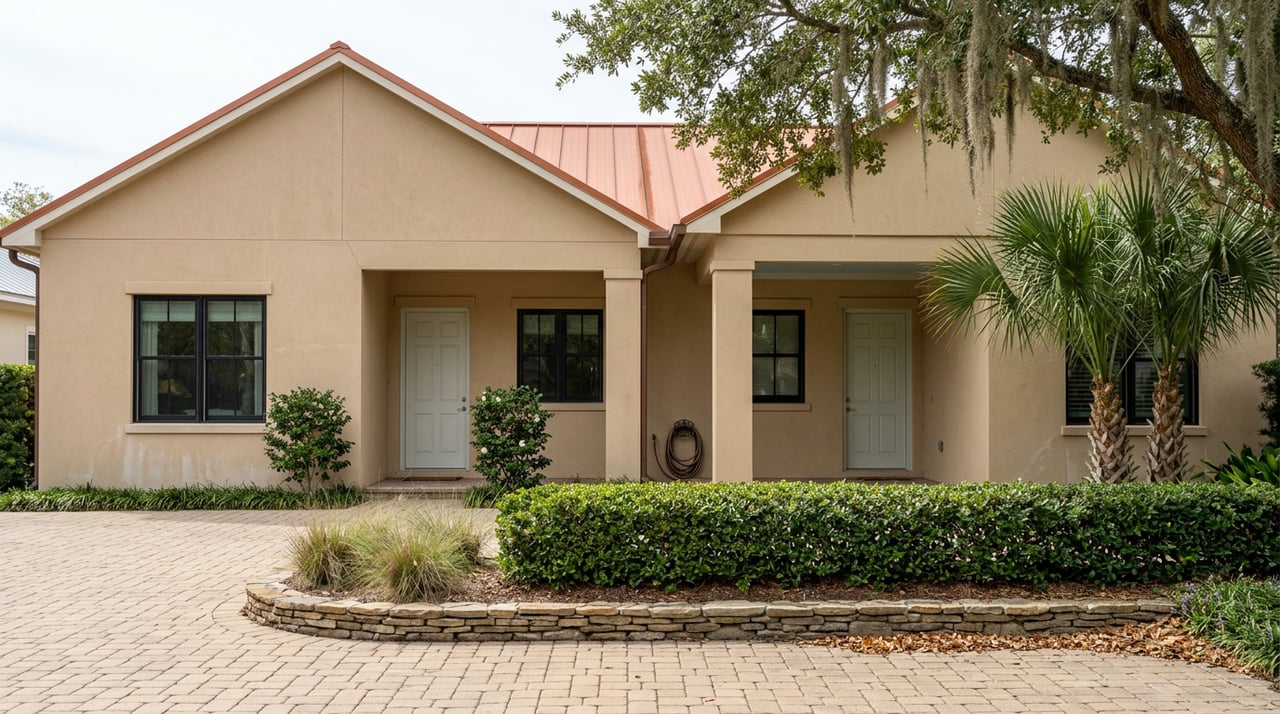
Drive through Hampton Hall today and the contradiction is visible before you ever open a spreadsheet. Finished homes with wide front porches and deep balconies sit along cul-de-sacs framed by lagoons and live oaks, the kind of streetscape a national builder plans down to the last shrub. Then, without warning, a gap opens between two houses: a grown-in, wooded lot with a for-sale sign, one of the last handful left in a community built for roughly 950 homesites. That gap is the whole story.
Hampton Hall was developed by Toll Brothers, and for years the community sold the way most Toll Brothers neighborhoods do: a builder sales office, a rotation of model homes, a phased release of lots, and pricing that moved in a predictable line. That era is functionally over. What's left is a market that looks confused in the data and makes perfect sense once you know what's actually being sold.
The number that doesn't match the number next to it
Pull two different market snapshots of Hampton Hall from this fall and you get two stories that shouldn't coexist. One shows the median sale price down 21% year-over-year. The other, tracking average sale price over the same trailing 12 months, shows a 12% increase. A live MLS snapshot from mid-July 2026 sits in between both, at a $824,500 median list price across 14 active listings, with an average of $321.67 per square foot.
| Metric | Figure | Window |
|---|---|---|
| Median sale price | $880,000 (down 21%) | trailing 12 months |
| Average sale price | $1,035,792 (up 12%) | trailing 12 months |
| Median list price (active listings) | $824,500 | mid-July 2026 |
| Average price per square foot | $321.67 | mid-July 2026 |
| Average days on market | 87 to 91 days | trailing 12 months |
A median that falls while an average climbs is not a data error. It is what happens when the cheap end of a market fills up with more transactions than usual at the same time the expensive end produces a few very large ones. Something changed about what's actually changing hands in Hampton Hall, and it isn't the community getting more or less desirable. It's the product mix.
Where the vacant lots went
At the time of this writing, land listings for Hampton Hall number in the single digits, and new-construction listings sit at just two. Set against a community platted for close to 950 homesites, that scarcity tells you the original build-out is essentially finished. The builder-controlled phase of Hampton Hall's life, the one with a sales trailer and a published price sheet, has given way to something closer to an infill market: the last scattered lots, a teardown here and there, sold one at a time to whichever custom builder the buyer chooses.
That shift shows up in who's actually building there now. H2 Builders, a Hilton Head-area custom builder, says it has completed more than 32 homes inside Hampton Hall and continues to pull new permits in the community. One recent resale listing described its home outright as an "H2 Builders" custom design. Boshaw Residential markets itself directly as a Hampton Hall home builder, positioning its hands-on process as the draw for buyers who want a specific floor plan rather than whatever a production builder has on offer. And at least one recent listing credited Randy Jeffcoat Builders with a custom lakefront build inside the gates.
None of that resembles a builder sales office. It resembles what happens in most established Lowcountry gated communities once the original developer moves on: a rotating cast of regional custom builders competing for the same short list of remaining lots, each buyer negotiating price, timeline, and finish level individually rather than picking from a published price sheet.
Why the math finally makes sense
Once you see the lot scarcity, the median-versus-average split stops being strange. A resale market dominated by older Toll Brothers-era product, including smaller carriage homes and golf cottages, pulls the median down as more of those changed hands. At the same time, a smaller number of large custom builds on the community's last premium lagoon and golf-view lots pull the average up, because a handful of $1.5 million-plus custom homes will move an average far more than they'll move a median. Neither number is wrong. They're measuring two different products that happen to share the same gate.
That distinction matters more than it sounds like it should, because it determines what "new construction in Hampton Hall" actually means for a buyer who types that phrase into a search bar. It doesn't mean walking into a decorated model and picking a lot from a site map. It means finding one of a handful of remaining vacant parcels, interviewing a custom builder, and budgeting for a process that runs closer to twelve months than to a builder's published move-in date.
What actually stays constant
The community's institutional side has kept investing even as the land side has thinned out. Hampton Hall Club is in the middle of a $6.6 million clubhouse expansion and renovation, the first phase of a larger Master Amenity Plan, funded without a member assessment after passing with more than 80 percent member support. Eric Bischofberger, the club's general manager and chief operating officer, told the Post and Courier that "this clubhouse renovation is the first step in a much larger, long-term vision for Hampton Hall." That kind of capital commitment from the club, happening at the same time the buildable land supply is running out, is worth noticing on its own: it suggests the amenity side of the community is planning for decades of continued occupancy, not winding down alongside the developer's exit.
What this means if you're comparing communities
A buyer weighing Hampton Hall against a community still in an active builder-sales phase, whether that's a newer phase release elsewhere in Bluffton or a master-planned community with an ongoing sales center, needs to compare two different transaction types, not two versions of the same one. A few practical questions worth asking before writing an offer:
- Is the listing you're looking at a resale of an original Toll Brothers-built home, or a custom build completed after the fact? The answer changes what "new" means and what warranty coverage, if any, applies.
- If you want to build rather than buy resale, how many vacant lots are actually on the market right now, and in what part of the community? Supply this thin moves fast.
- Which builder is attached to the lot or the plan you're considering, and what does their completed work in Hampton Hall specifically look like? A builder's track record inside this particular gate is more useful than a generic portfolio.
- Are you comparing list price, sale price, or price per square foot? Given the current spread between Hampton Hall's median and average, the wrong comparison can make two very different homes look interchangeable on paper.
FAQ
Is there still land available to build on in Hampton Hall? Yes, but the number of vacant parcels is small at any given time, often in the single digits. Buyers who want to build should expect competition for the remaining lots rather than a wide selection.
What's the real difference between a resale home and a custom build here? A resale home was typically completed during or shortly after the original Toll Brothers build-out and has already been through at least one ownership transfer. A custom build on one of the last vacant lots is designed and constructed to a specific buyer's plan by a builder like H2 Builders, Boshaw Residential, or a similar regional firm, with pricing, timeline, and finishes negotiated directly rather than set by a published price sheet.
Does the community's golf course require membership to use? Golf membership at Hampton Hall's Pete Dye-designed course is optional rather than mandatory for residents, which is a different structure than some neighboring gated communities where club membership is tied directly to every property.
If you're comparing Hampton Hall's resale market against its shrinking custom-build inventory, or trying to figure out which of the last available lots is worth pursuing, Go Gated Realty can walk through the current listings, the builders active in the community, and what each option actually costs before you write an offer. Request a free buyer consultation and get a straight answer before you commit to either path.