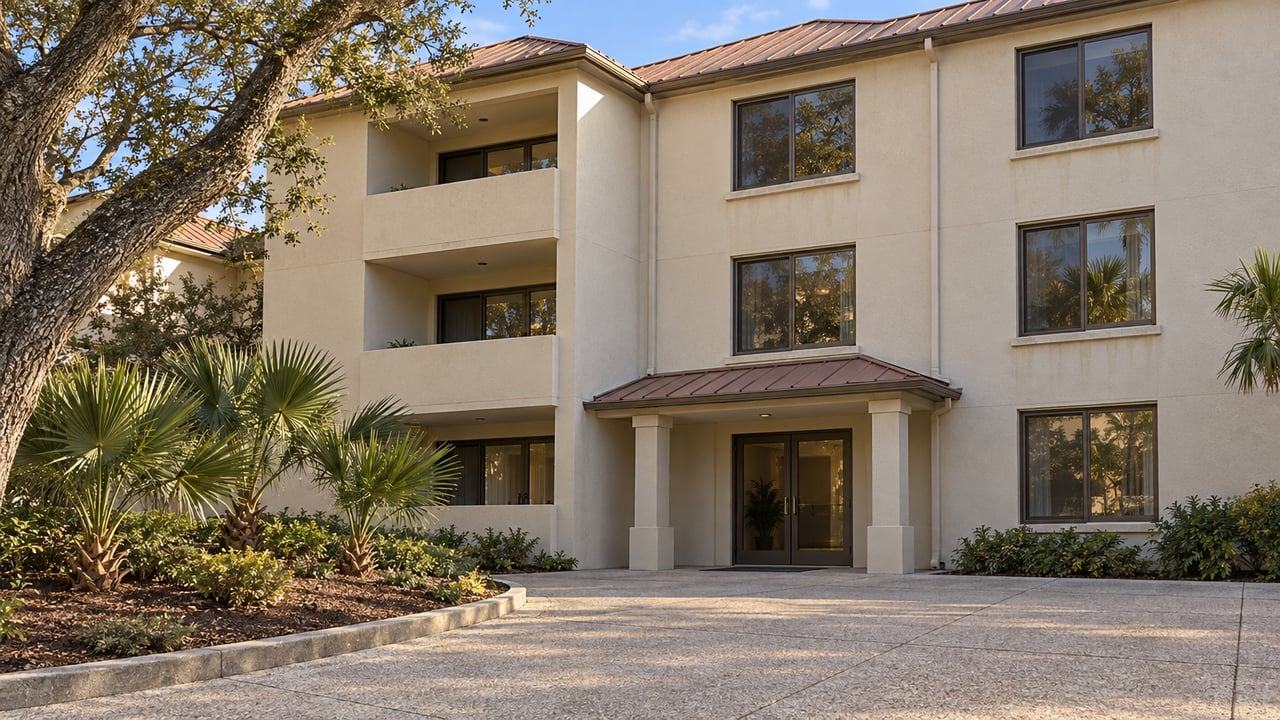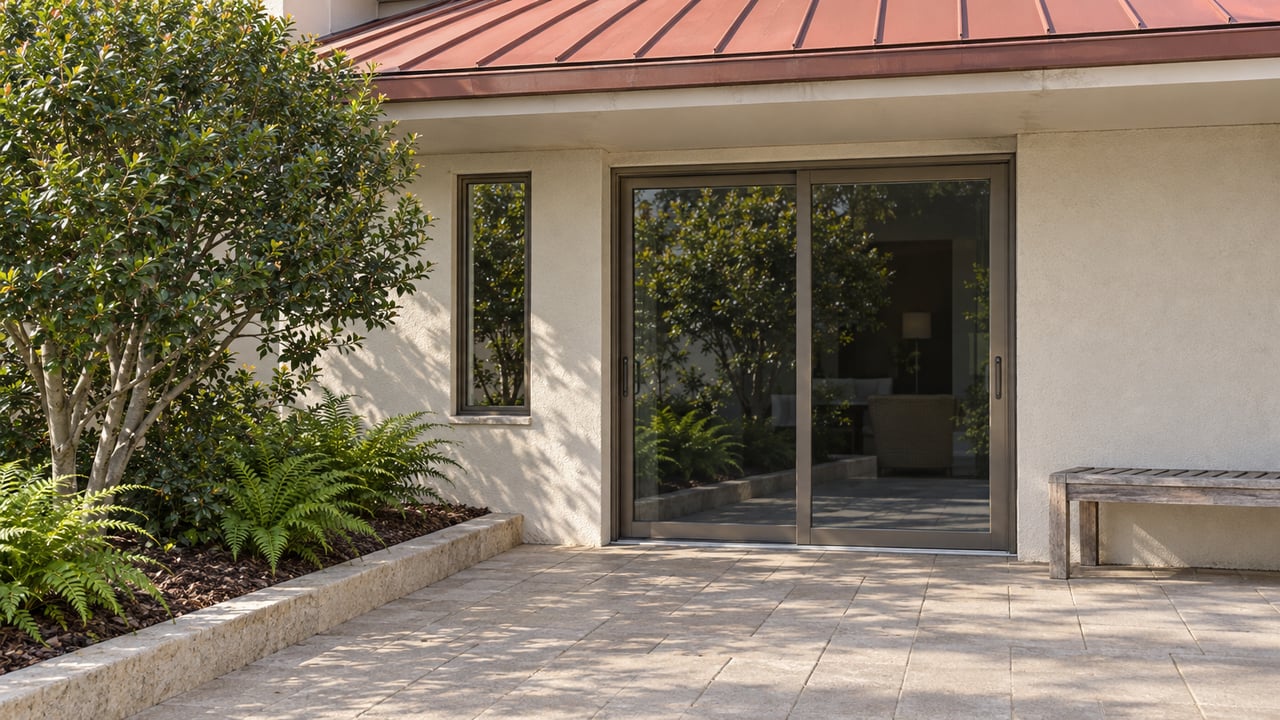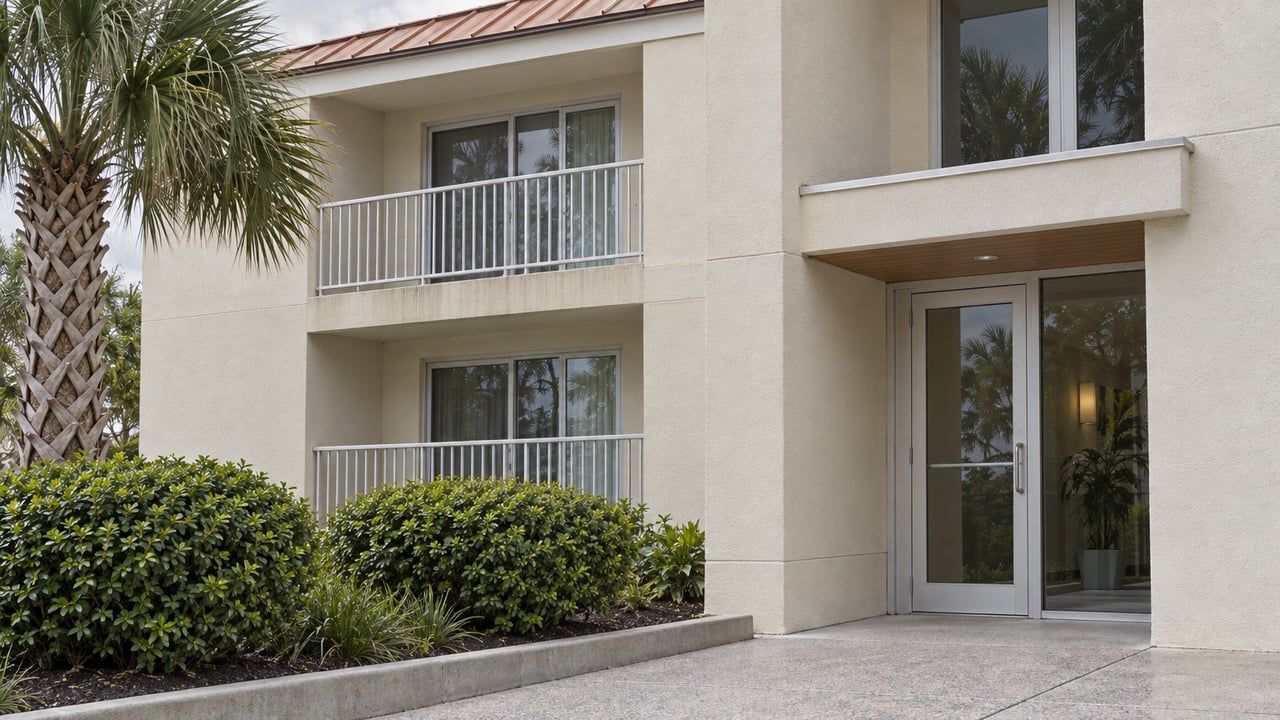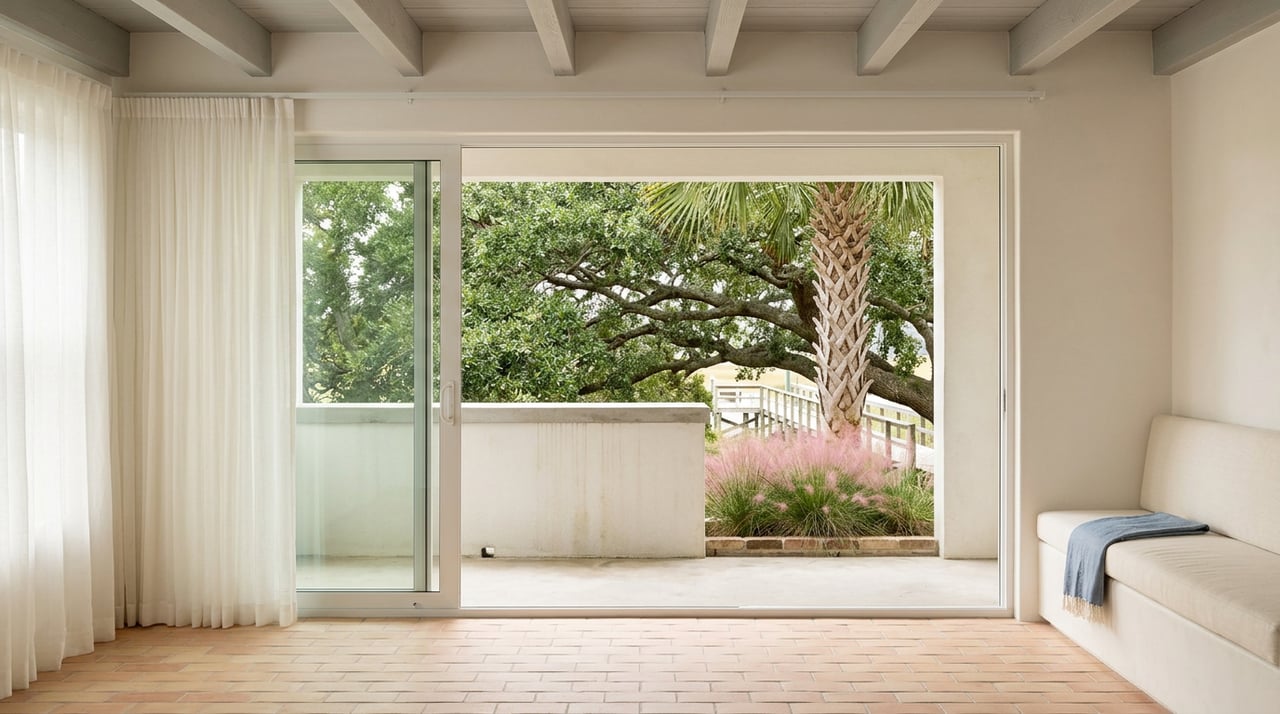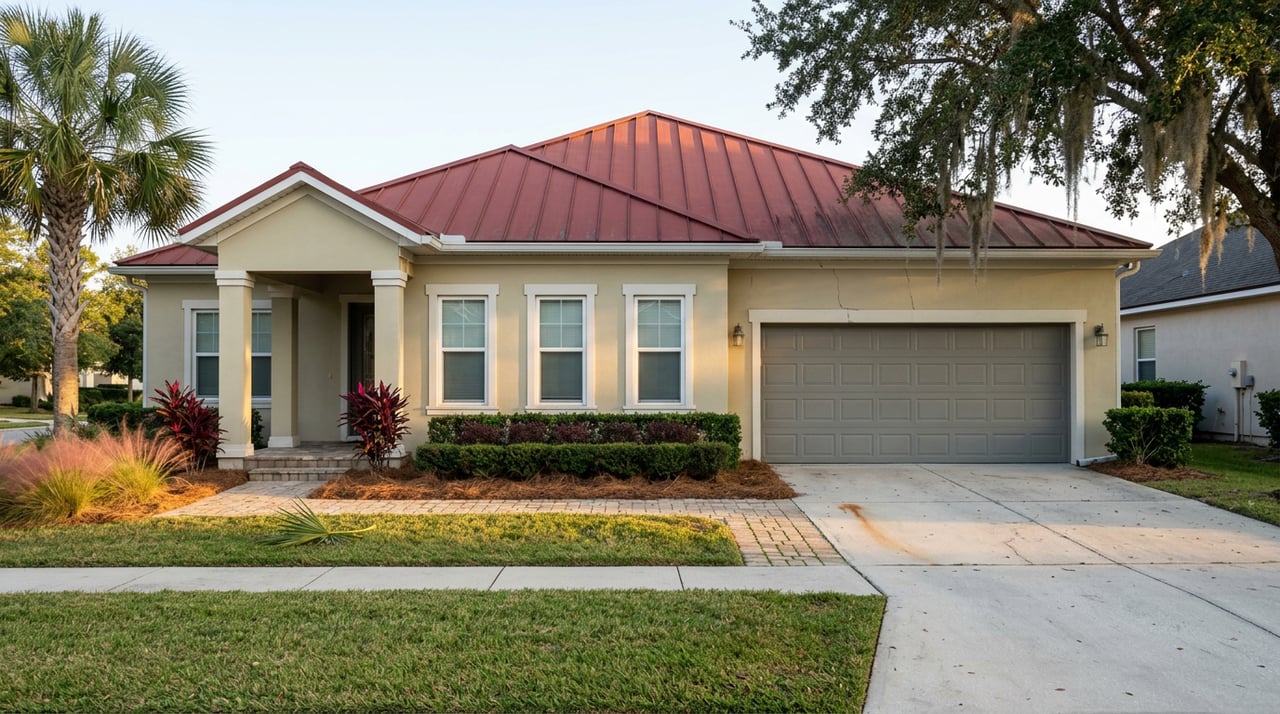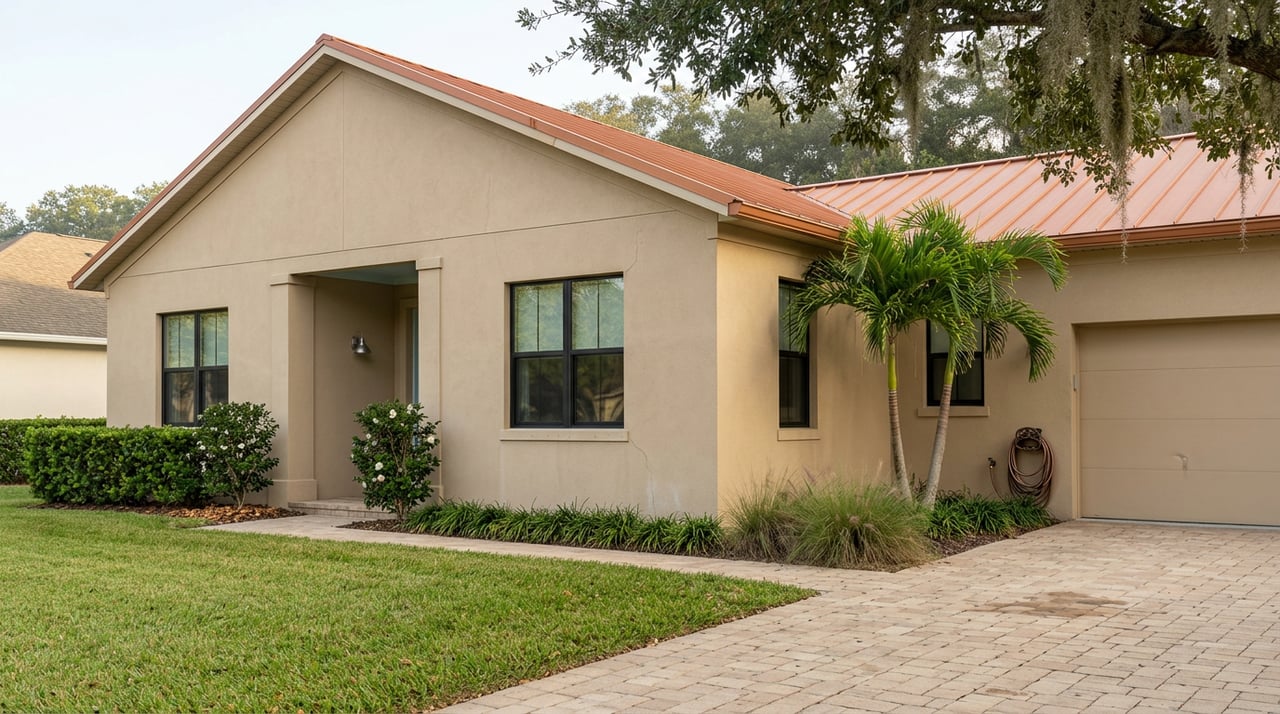
Two homes list for the same price in Sun City Hilton Head. Same square footage, same model, same golf cart ride to the pool. One sits on the Beaufort County side of the community. The other sits a few streets over, in Jasper County. Nothing about the yard, the roofline, or the listing photos tells you which is which. But the county line running through this community changes what each buyer actually pays every single year they own the place, and it rarely gets explained until after the offer is written.
That's the piece most people miss when they anchor on the median price alone. As of July 2026, the median home price in Sun City Hilton Head sat at $479,900, with an average sale price of $505,431 and homes taking roughly 88 days to sell. Those numbers describe the whole community as one market. They aren't. Sun City is stitched together across two counties and two separate fee structures, and the gap between them is real money, not a rounding error.
A Community Built Straddling a Line
Del Webb bought the land from the Union Camp Company in 1993, broke ground in April 1994, and opened the gates to the first 100 residents by June 1995. Over three decades of continuous building, the community grew into the largest age-restricted development in South Carolina, spanning both Beaufort and Jasper counties in the Okatie area west of Hilton Head Island. That's not a historical footnote. It's the reason two homes on the same street can carry different tax bills for the rest of your ownership.
You'll see the county line show up in plain language on individual listings. Homes on one side get described as sitting on "the Beaufort County side," with the tax advantage stated as a selling point. That phrase only makes sense if the other side costs more, and it does.
What the County Line Actually Costs You
Beaufort County and Jasper County calculate property taxes the same way, using an assessment ratio applied to a millage rate, but the millage rates themselves differ, and so does the resulting bill for an owner-occupied home. Public tax data puts Beaufort County's effective rate for a primary residence in the range of roughly 0.45% to 0.75% of value, depending on the specific taxing district and whether the owner has filed for the legal residence ratio. Jasper County's effective rate runs meaningfully higher for the same classification, with public estimates in the 0.86% to 1% range for primary residents.
| Ownership type | Beaufort County side | Jasper County side |
|---|---|---|
| Primary residence (owner-occupied) | roughly 0.45%–0.75% of value | roughly 0.86%–1% of value |
| Second home / non-primary | roughly 1.25%–2% of value | roughly 2%–3% of value |
Run those percentages against the July 2026 median of $479,900 and the spread stops being abstract. A primary residence on the Beaufort side might land somewhere between $2,160 and $3,600 a year in property tax. The same home value on the Jasper side lands closer to $4,100 to $4,800. That's a difference of roughly $500 to $2,600 a year, before either buyer has spent a dollar on the mortgage.
These are public estimates, not a bill. Millage rates change annually, and the only number that matters is the one the county assessor calculates for the specific parcel. The Beaufort County Auditor and the Jasper County Auditor both publish current millage information, and running an address through either office before writing an offer takes less time than a single showing.
The Second Split Inside the Gates
The county line isn't the only place Sun City splits in two. The community operates under a Property Owners Association rather than a traditional HOA, and that POA runs two different fee schedules depending on which section a home sits in. The original Sun City core carries an annual assessment in the neighborhood of $2,688. Sun City North, the newer western expansion, runs closer to $3,540 a year, a difference tied to newer infrastructure and amenity allocations on that side of the community.
Stack the two splits together and you get a range wide enough to change a buying decision. A primary-residence buyer in original Sun City on the Beaufort County side might see combined POA and property tax costs in the $5,000 to $6,300 range annually. A buyer in Sun City North on the Jasper County side, at the same $479,900 price point, could be looking at $8,000 or more.
On paper, both buyers paid the same price for the house. In practice, one of them is carrying roughly $1,400 to $3,500 more a year in mandatory costs, a gap that adds up over a decade of ownership.
The Fee That Doesn't Show Up on the Listing
There's a third number worth budgeting for before you get to the closing table. Resale purchases in Sun City typically carry a one-time initiation cost, commonly cited at roughly 0.33% of the sale price, plus a flat administrative fee near $300 and a resale enhancement fee around $3,500. On a home priced at the July 2026 median of $479,900, that combination works out to roughly $5,380. It's not a hidden charge exactly, but it also isn't a line item most buyers see until the estoppel packet arrives, and it rarely gets factored into the initial budget conversation.
The fix is simple. Ask your agent to pull the current, itemized Schedule of Fees for the specific section you're considering before you write an offer, not after. Amounts and formulas shift over time and by section, so treat any number here as a starting point for that conversation rather than a fixed figure.
The Amenity Campus Is Redrawing the Map
There's a third variable layering on top of the county line and the POA split, and it's new enough that most published guides haven't caught up to it. Del Webb opened a large new amenity campus this past spring, built around a resort-style pool and wellness center. One local listing describes the project as a $60 million investment, while a homebuilder trade write-up from March 2026 put the figure closer to $50 million. The exact price tag is less important than what it signals: PulteGroup is actively investing in the newer side of the community, in tandem with the ongoing Argent East expansion that's adding roughly 1,500 new homes to Sun City's footprint, according to the landscape architecture firm that designed the project's master plan.
That investment is starting to create its own kind of premium, separate from the county line. A home a short golf cart ride from the new campus carries different appeal than an otherwise identical home a mile away in an older section, regardless of which county either one sits in. At the top of the spectrum, the gated Riverbend enclave offers custom homes on larger lots with its own community dock on the Okatie River, a different product entirely from a resale villa in the original core, and priced accordingly.
What To Actually Compare
Before you put two Sun City listings side by side and assume the lower price wins, run through this:
- Confirm which county the parcel sits in, using the county assessor's parcel lookup rather than relying on the listing description alone.
- Ask for the current POA Schedule of Fees for that specific section, not a community-wide average.
- Request the resale estoppel packet early, so the initiation, admin, and enhancement fees are part of your budget from the start rather than a surprise at closing.
- Ask how far the home sits from the amenity campus you'll actually use, since a golf cart ride matters more day to day than it does in a listing photo.
- If you're buying with financing, ask your lender whether the specific section's POA reserves or litigation history could affect loan terms, since some programs review association health before approving a loan.
A Couple of Things Worth Clarifying
Does buying on the Beaufort County side always mean lower total cost? Not automatically. The tax rate is typically lower, but if that home also sits in Sun City North, the higher POA assessment can offset some or all of the tax savings. The two splits don't always align on the same side of the community, which is exactly why comparing on price alone misses the full picture.
Can I find out which county a listing is in before I tour it? Yes. Both the Beaufort County Assessor and Jasper County Assessor maintain parcel lookup tools, and a specific address will return the taxing jurisdiction directly. It's worth doing before you fall for a floor plan.
Is the new amenity campus open to the whole community, or just the newer sections? Public community descriptions indicate Sun City's amenities are distributed across multiple campuses that residents can access community-wide, with proximity affecting convenience rather than access. Confirm current usage rules for any specific campus with the association directly, since those details can change as new sections come online.
None of this is tax or legal advice, and every figure here should be verified against the current county assessment and the association's official Schedule of Fees before you rely on it for a purchase decision. What it should do is change the question you ask when you see a Sun City listing. Not just "what's the price," but "which county, which POA schedule, and how far from the newest campus." That's the comparison a median price can't make for you.
If you're weighing a specific section, or trying to figure out what a particular home actually costs to carry each year, Go Gated Realty can walk through the county line, the fee schedule, and the current numbers for that address before you write an offer. Request a free buyer consultation and bring the address.